
Talent Communities Turning Passive Candidates Into Future Hires
Hiring the right talent has become more challenging than ever. Many organizations struggle not because talent is unavailable, but because the best candidates are often not actively looking for jobs.
These professionals may be satisfied in their current roles, yet they remain open to better opportunities that align with their goals.

What Are Talent Communities?
Talent communities are groups of potential candidates who have shown interest in a company but may not be ready to apply for a job immediately. These candidates stay connected with the organization through emails, content, events, or social platforms.
Unlike traditional recruitment, talent communities focus on relationship-building rather than immediate hiring. This approach helps companies stay top-of-mind when candidates are ready to make a career move.
Why Passive Candidates Matter in Modern Hiring
Passive candidates often include skilled professionals, experienced leaders, and niche talent. They may not be browsing job portals, but they are open to opportunities that align with their goals and values.
Hiring passive candidates through talent communities helps organizations:
- Access higher-quality talent
- Reduce competition for candidates
- Shorten future hiring cycles
- Improve cultural alignment
How Talent Communities Turn Passive Candidates Into Future Hires
Talent communities create a continuous engagement process. Instead of a one-time interaction, candidates receive value and meaningful communication over time.
Key Ways Talent Communities Work
- Sharing company updates and culture stories
- Providing career advice and industry insights
- Sending relevant job alerts when roles open
- Inviting candidates to webinars or events
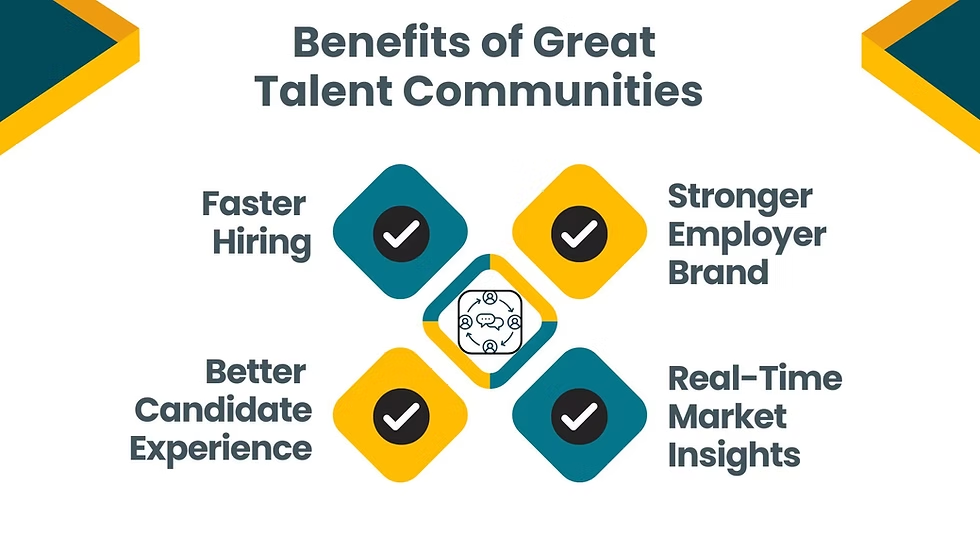
Benefits of Building Strong Talent Communities
Organizations that invest in talent communities experience several long-term benefits that improve hiring efficiency and candidate engagement.
1. Faster Hiring Process
When a position opens, recruiters already have a pool of interested candidates. This reduces time-to-hire and lowers overall recruitment costs.
2. Better Candidate Experience
Candidates feel valued because the relationship is not limited to job applications. This improves employer branding and long-term trust.
3. Improved Quality of Hires
Engaged candidates understand the company culture better, leading to stronger culture fit, higher retention, and better performance.
4. Reduced Dependency on Job Portals
Talent communities reduce reliance on expensive job boards and external recruitment agencies, helping organizations save costs.
Role of Technology in Managing Talent Communities
Technology makes it easier to manage and scale talent communities. Modern recruitment tools help organizations:
- Segment candidates based on skills and interests
- Automate personalized communication
- Track engagement levels
- Analyze candidate behavior

Best Practices for Building an Effective Talent Community
To make talent communities successful, organizations should focus on building genuine and long-term relationships. Some proven best practices include:
- Be consistent with communication
- Share meaningful and relevant content
- Personalize messages whenever possible
- Avoid sending only job-related emails
- Respect candidate privacy and preferences
Common Mistakes to Avoid
Some organizations fail to get results from talent communities because they:
- Communicate only when a job is open
- Send generic or irrelevant messages
- Over-communicate and overwhelm candidates
- Ignore feedback and engagement signals
Avoiding these mistakes helps organizations maintain long-term engagement and trust within their talent communities.
Talent Communities and Employer Branding
Talent communities also play an important role in strengthening employer branding. When candidates regularly see positive content, employee stories, and company values, they develop trust and confidence in the brand.
Even candidates who are not hired may recommend the company to others, helping expand the talent network further.
The Future of Talent Communities in Recruitment
The future of recruitment is relationship-driven. As hiring becomes more competitive, talent communities will play a central role in building sustainable talent pipelines.
Final Thoughts
Talent communities are not just a recruitment trend—they are a strategic advantage. By nurturing passive candidates and building long-term relationships, organizations can turn interest into action when the right opportunity arises.